
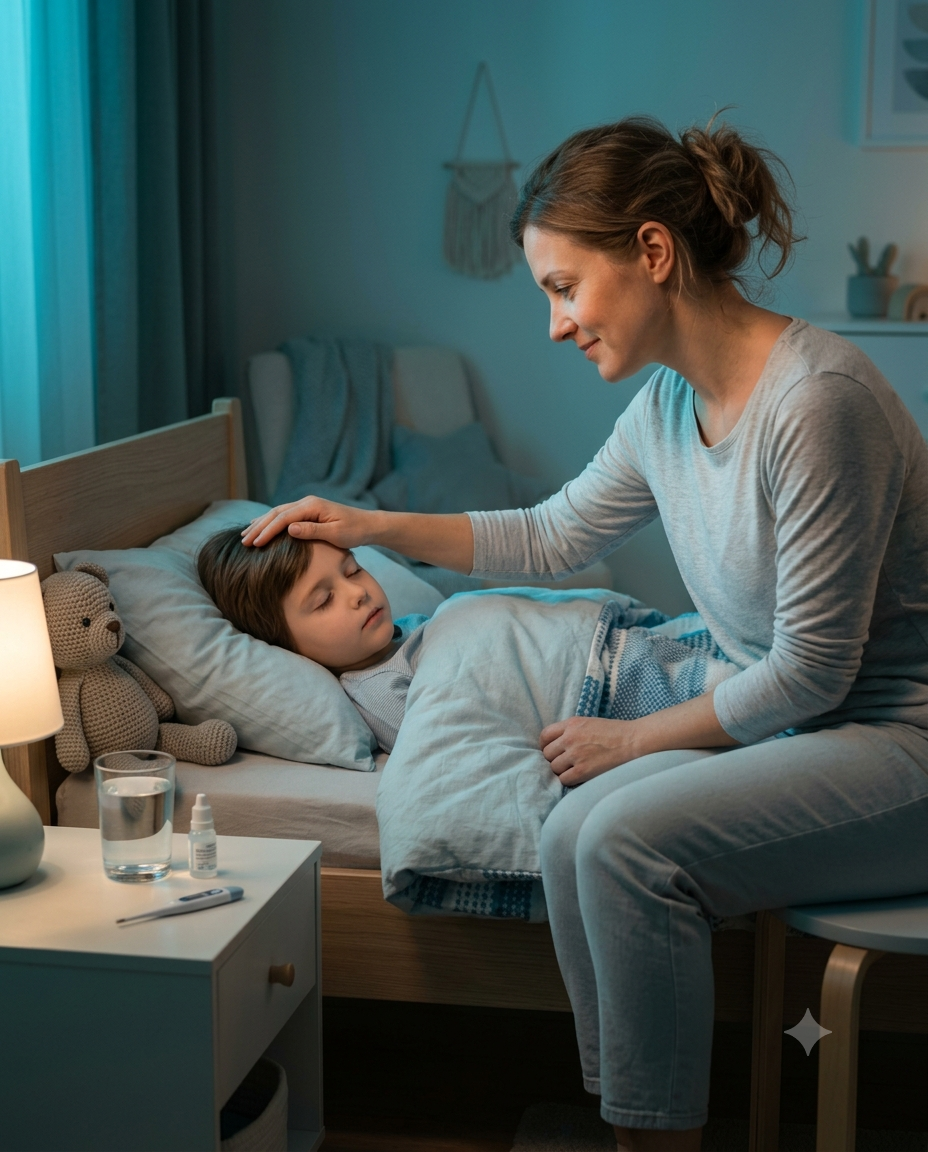
Why Does Kids' Pain Flare Up at Night? Physiology vs. Red Flags
Why Does Our Children's Condition Worsen at Night?
A child’s symptoms often intensify at night due to an interplay between the circadian rhythm, physiological changes during sleep, and bedroom environment—without this necessarily meaning the underlying illness has become more severe.
1. Physiological Causes
* Hormonal Changes: Cortisol levels (the body's natural anti-inflammatory) drop while melatonin rises, triggering inflammatory responses, fever, and coughing.
* Respiration & Asthma: Airway passages naturally narrow at night and clearing mucus becomes harder, exacerbating asthma attacks and croup.
* Lying Flat Position: Increases nasal congestion, prevents fluid drainage from the middle ear (worsening pain), and facilitates acid reflux due to the loss of gravity's effect.
* Absence of Distractions: Daytime activities fade away, increasing both the child's focus on discomfort and the parents' vigilance.
* Environmental Factors: Bedroom triggers (like dust mites in bedding) and cold or dry air can easily initiate coughing fits.
2. Warning Signs Requiring Immediate Emergency Care
* Severe difficulty breathing, worsening wheezing, or stridor at rest.
* Cyanosis (bluish tint around the lips/face), or severe lethargy and difficulty waking up.
* Severe dehydration, or persistent high fever non-responsive to antipyretics.
3. Management & Care Guidelines
* Medication & Hydration: Stick to the core treatment plan, adjust dosage timing for night-time coverage, maintain adequate hydration, and use nasal saline solutions.
* Safe Sleep Practice: Strictly adhere to safe infant sleep guidelines (placing infants on their back) without resorting to unsafe sleeping positions.
* Environmental Control: Keep bedding clean from dust mites, and maintain balanced room temperature and humidity levels.
 10 Sep 2026